From Six Numbers to Millions of Weights: An Exploratory Study in AI-Generated Image Detection
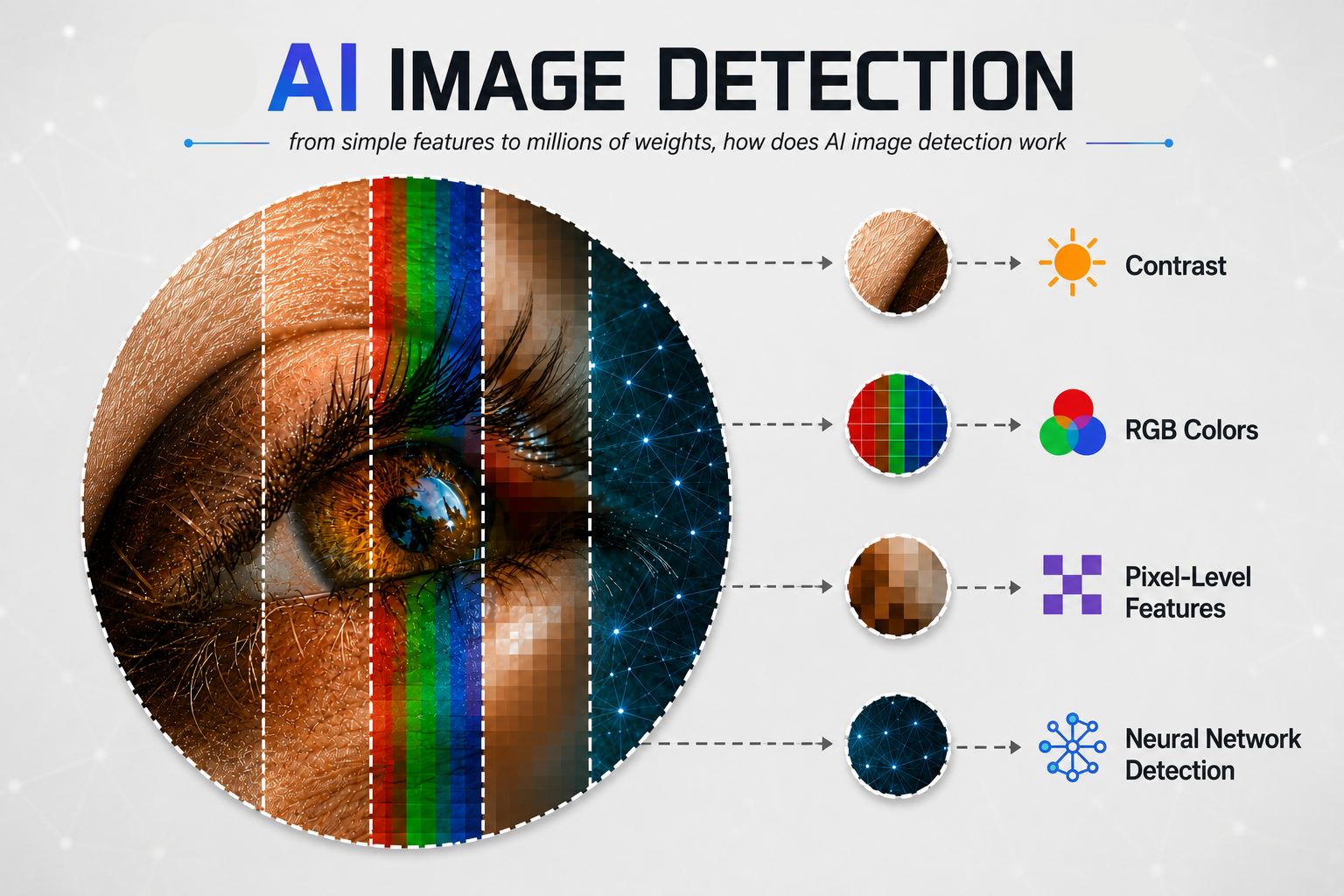
AI image generators can now produce photorealistic pictures of people, places, and things that never existed, blurring the line between what's real and what's synthetic. This project was meant to understand, from the ground up, what actually happens when a machine tries to spot another machine's work: what is an image to a computer, what does a model actually learn, what does training even mean. From there we built and tested three detectors of increasing complexity, a Random Forest using six simple image statistics, a Random Forest using raw pixel data, and a fine-tuned EfficientNet-V2-S neural network, each one tested as honestly as we could manage rather than optimized for a good-looking result. What we came away with wasn't a finished and perfect detector, but a clear understanding of why this problem is harder than it looks. That focus on understanding over performance felt true to what the AI & Society Micro-Degree taught us: not just building with AI, but genuinely understanding it.