Ethik der Künstlichen Intelligenz
Forschung an der Schnittstelle von Technologie und Moral.
Wir erforschen grundlegende Fragen der Künstlichen Intelligenz auf interdisziplinäre Weise, indem wir rigoroses philosophisches Denken mit empirischen Methoden aus den Kognitionswissenschaften verbinden.
Zentrale Fragen, die uns nachts wach halten, sind: Wer ist verantwortlich, wenn KI Schaden anrichtet? Wie können KI-Systeme mit menschlichen Werten in Einklang gebracht werden? Was sind unsere normativen Erwartungen an künstliche Agenten? Wie sollten wir algorithmische Voreingenommenheit begreifen und angehen? Wann können und sollten wir KI vertrauen?
Unsere Forschung zielt darauf ab, unser Verständnis der ethischen Implikationen von KI zu vertiefen und die Entwicklung von ethisch fundierten Praktiken und Strategien zu fördern, die den verantwortungsvollen Einsatz von KI-Technologien in der Gesellschaft unterstützen.
Einige Beispielpublikationen befassen sich mit Verantwortungslücken bei der Nutzung autonomer Systeme, mit der Schuldzuweisung an KI-gesteuerte Systeme, mit der Frage, ob Menschen glauben, dass KI lügen kann, ob sie Kunst machen kann und was, wenn überhaupt, als “moralischer Algorithmus” gelten kann.
Falls Sie einen Hintergrund in Philosophie, Psychologie, Linguistik, Recht oder Informatik haben und an einem Forschungspraktikum oder an der Betreuung von Master- und Doktorarbeiten interessiert sind, wenden Sie sich bitte an Ritsaart Reimann.
Team
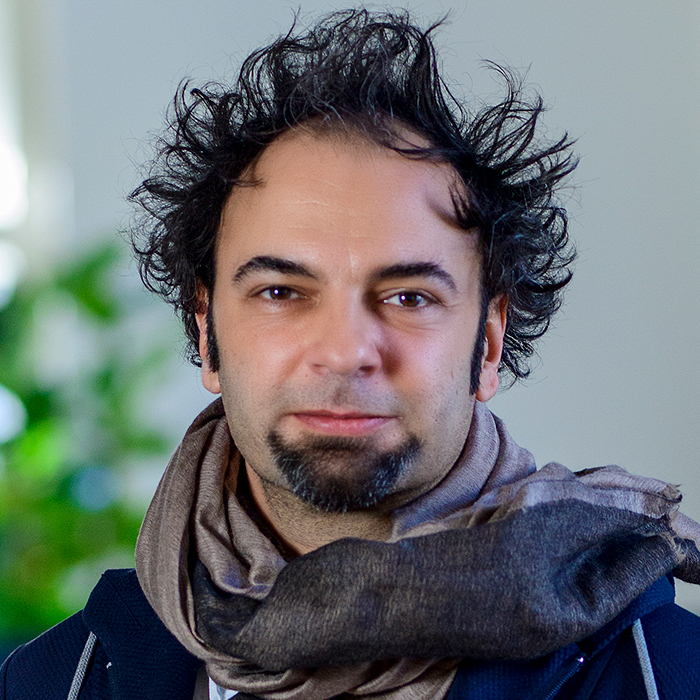
Univ.-Prof. PhD Markus Kneer

Ritsaart Reimann, PhD
University assistant, PostDoc
E-Mail: ritsaart.reimann(at)uni-graz.at
ORCID: 0000-0003-4742-2887
Website: https://www.ritsaartreimann.com/
Ritsaart Reimann is a postdoctoral researcher working on the ethics of artificial intelligence, with a background in social epistemology. His current research centres on questions around responsibility and trust in human–AI interactions. He combines philosophical analysis with empirical work that explores how people think about AI systems and what these attitudes mean for the design and regulation of intelligent machines.
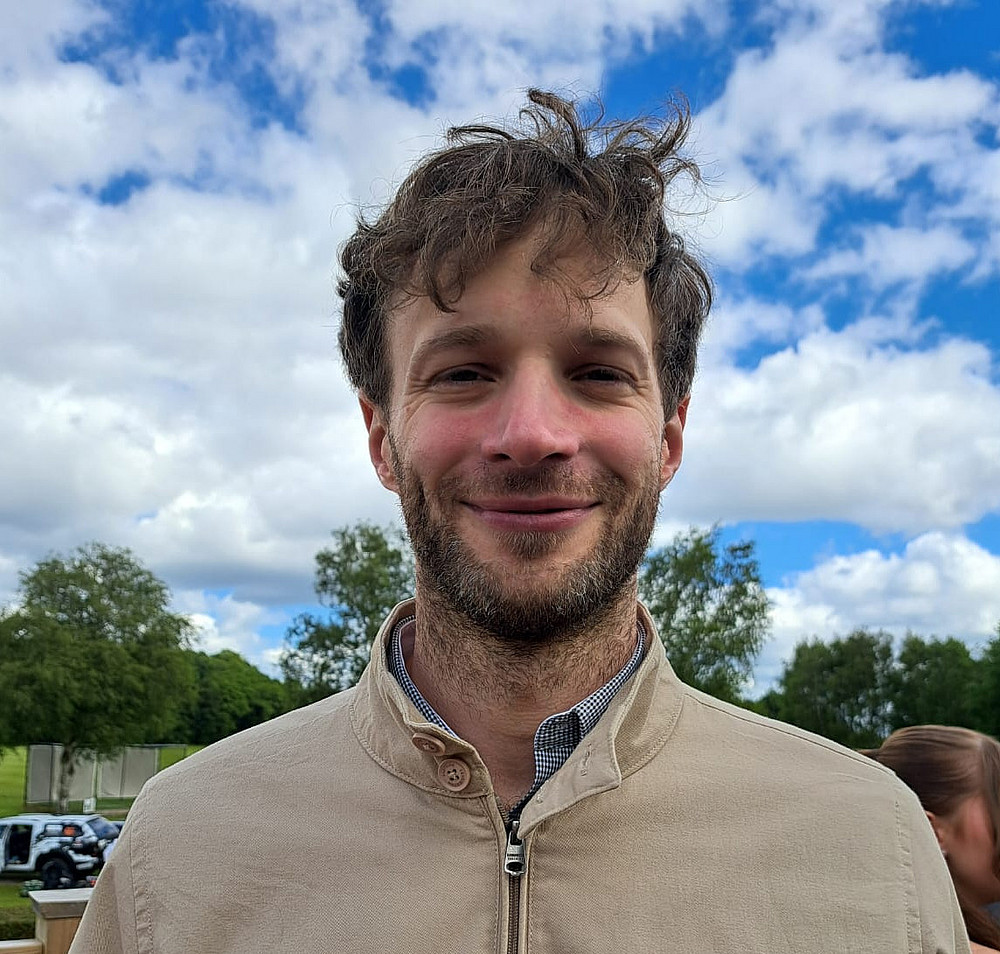
Miklós Kurthy, PhD
Postdoctoral researcher, FWF-Project NIHAI
E-Mail: miklos.kuerthy@uni-graz.at
ORCID: 0000-0002-7940-845X
Website:
Miklós Kürthy is a postdoctoral researcher. He is trained in linguistics, cognitive science, and philosophy, and he combines experimental and statistical approaches with philosophical and linguistic analysis to study moral and social concepts, thinking, and reasoning. His current research topics include normative thinking, reasoning about inconsistencies, and misinformation.

Levin Güver, MA
Projectassistent
E-Mail: levin.guever@uni-graz.at
ORCID: 0000-0002-0973-5172
Website: levinguever.com
Levin Güver is a final-year PhD student at University College London, where he is jointly supervised across the Law Faculty and Philosophy Department. He holds a Bachelor and Master of Law from the University of Zurich, the latter of which he graduated as valedictorian. His research lies at the three-way intersection of law, philosophy, and psychology, and he is interested in all aspects of criminal jurisprudence.

Paloma Puljic, BA BA MA
Project assistant, FWF-Project NIHAI
PhD student
E-Mail: paloma.puljic(at)uni-graz.at
Paloma Puljic is a doctoral student researching topics of applied ethics, with particular emphasis on AI and technology ethics. She focuses on trust, trustworthiness, and normative expectations in human-AI interaction, as well as AI assertion. In her dissertation project, she will employ experimental philosophy methods to investigate trust relationships between humans and conversational AI, with the aim of informing AI ethics, design, and regulation. She is committed to advancing intergenerational justice, focusing on the long-term ethical and societal implications of artificial intelligence and sustainability challenges for future generations.

Niels Lilienthal supports the project Norms of Assertion in Linguistic Human-AI Interaction (NIHAI) as a student assistant, contributing to statistical data analysis. He is a master’s student in the Middle European Interdisciplinary Master’s Programme in Cognitive Science (MEi:CogSci) at the University of Vienna and holds a bachelor’s degree in Psychology from Humboldt University of Berlin. Niels is interested in various areas of experimental psychology, cognitive neuroscience, and the philosophy of (artificial) mind. Niels Lilienthals goal is to advance the social development of artificial intelligence and the field of robotics by investigating the psychological mechanisms underlying human-robot interaction(HRI) and human–AI interaction (HAII).
Gastforscherin
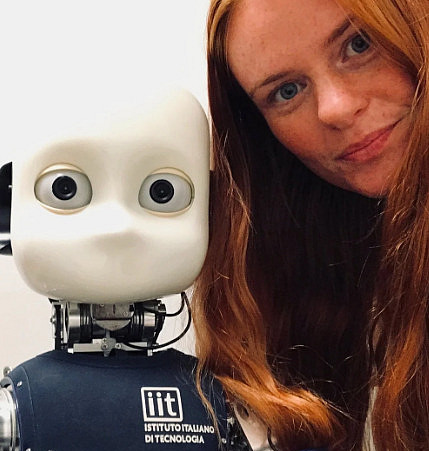
Ziggy O’Reilly, BSc MSc PhD
Guest researcher
E-Mail: ziggy.oreilly(at)uwa.edu.au
ORCID: 000-0001-5476-4485
Website: https://www.ziggyoreilly.com/
Ziggy O’Reilly is a cognitive scientist whose work examines the socio-cognitive and moral processes underlying human interaction with artificial agents, including AI systems and robots. Her research combines behavioural experimentation with quantitative analysis to investigate social cognition, moral judgment, and intentional stance adoption in human-AI and human-robot interaction. In parallel, she engages in artistic research practices, developing narrative-based experimental stimuli (e.g., text vignettes, film, and embodied installations) that both support empirical investigation and critically reflect on the societal implications of emerging technologies. She also leads hands-on technology workshops that engage public audiences in discussions around the scientific and ethical dimensions of AI and robotics.