



Ethics of Artificial Intelligence
Research at the intersection of technology and ethics.
We explore foundational questions concerning Artificial Intelligence in an interdisciplinary fashion, combining rigorous philosophical thought with empirical methods from the cognitive sciences.
Central questions that keep us awake at night are: Who is responsible when AI causes harm? How can AI systems be aligned with human values? What are our normative expectations towards artificial agents? How should we conceive of, and tackle, algorithmic bias? When can, and should, we trust AI?
Our reseach strives to deepen our understanding of the ethical implications of AI as well as to catalyze the development of ethically sound practices and policies that underpin the responsible deployment of AI technologies in society.
Some example publications regard responsibility gaps in the use of autonomous systems, the attribution of blame to AI-driven systems, the question whether people think AI can lie and whether it can make art and what, if anything, can count as a “moral algorithm”.
In case you have a background in philosophy, psychology, linguistics, law or computer science and are interested in a research internship, or MA and PhD thesis supervision, please get in touch with Ritsaart Reimann.
Team
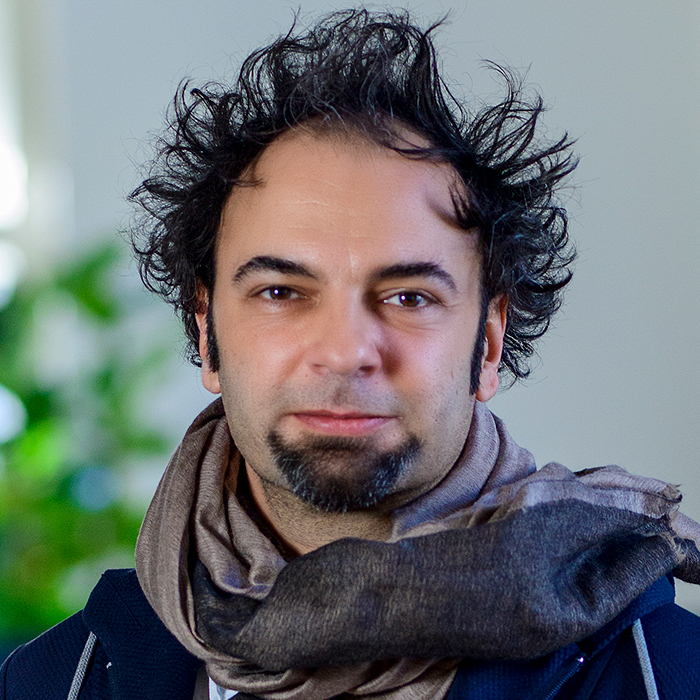
Univ.-Prof. PhD Markus Kneer

Ritsaart Reimann, PhD
University assistant, PostDoc
E-Mail: ritsaart.reimann(at)uni-graz.at
ORCID: 0000-0003-4742-2887
Website: https://www.ritsaartreimann.com/
Ritsaart Reimann is a postdoctoral researcher working on the ethics of artificial intelligence, with a background in social epistemology. His current research centres on questions around responsibility and trust in human–AI interactions. He combines philosophical analysis with empirical work that explores how people think about AI systems and what these attitudes mean for the design and regulation of intelligent machines.

Miklós Kurthy, PhD
Postdoctoral researcher, FWF-Project NIHAI
E-Mail: miklos.kuerthy@uni-graz.at
ORCID: 0000-0002-7940-845X
Website:
Miklós Kürthy is a postdoctoral researcher. He is trained in linguistics, cognitive science, and philosophy, and he combines experimental and statistical approaches with philosophical and linguistic analysis to study moral and social concepts, thinking, and reasoning. His current research topics include normative thinking, reasoning about inconsistencies, and misinformation.

Levin Güver, MA
Projectassistent
E-Mail: levin.guever@uni-graz.at
ORCID: 0000-0002-0973-5172
Website: levinguever.com
Levin Güver is a final-year PhD student at University College London, where he is jointly supervised across the Law Faculty and Philosophy Department. He holds a Bachelor and Master of Law from the University of Zurich, the latter of which he graduated as valedictorian. His research lies at the three-way intersection of law, philosophy, and psychology, and he is interested in all aspects of criminal jurisprudence.

Paloma Puljic, BA BA MA
Project assistant, FWF-Project NIHAI
PhD student
E-Mail: paloma.puljic(at)uni-graz.at
Paloma Puljic is a doctoral student researching topics of applied ethics, with particular emphasis on AI and technology ethics. She focuses on trust, trustworthiness, and normative expectations in human-AI interaction, as well as AI assertion. In her dissertation project, she will employ experimental philosophy methods to investigate trust relationships between humans and conversational AI, with the aim of informing AI ethics, design, and regulation. She is committed to advancing intergenerational justice, focusing on the long-term ethical and societal implications of artificial intelligence and sustainability challenges for future generations.

Niels Lilienthal supports the project Norms of Assertion in Linguistic Human-AI Interaction (NIHAI) as a student assistant, contributing to statistical data analysis. He is a master’s student in the Middle European Interdisciplinary Master’s Programme in Cognitive Science (MEi:CogSci) at the University of Vienna and holds a bachelor’s degree in Psychology from Humboldt University of Berlin. Niels is interested in various areas of experimental psychology, cognitive neuroscience, and the philosophy of (artificial) mind. Niels Lilienthals goal is to advance the social development of artificial intelligence and the field of robotics by investigating the psychological mechanisms underlying human-robot interaction(HRI) and human–AI interaction (HAII).